
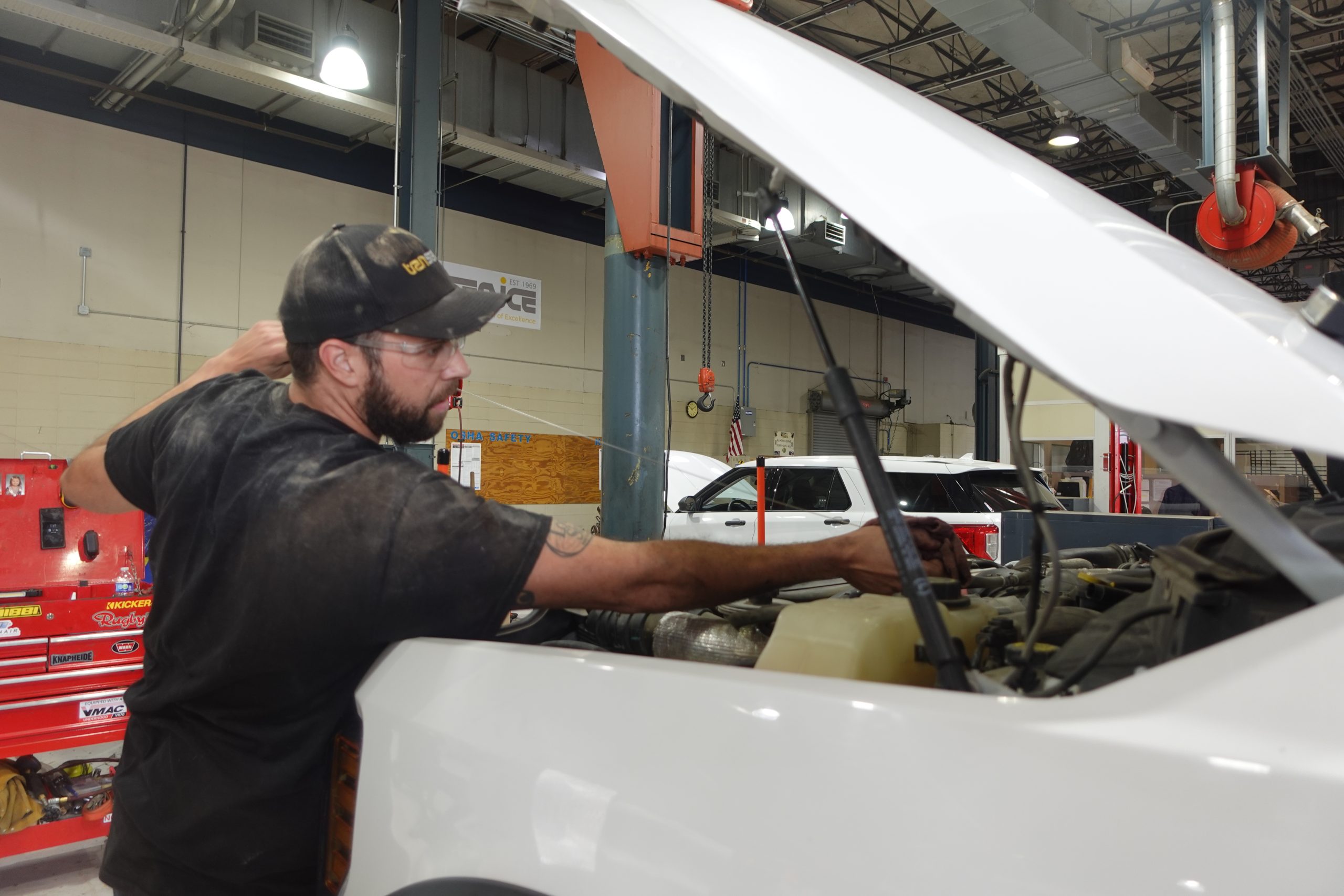
For Canadian fleet operators, maintenance is never simply about repairing what breaks. Every maintenance decision affects vehicle uptime, operating costs, driver productivity, customer service, safety, and ultimately the reliability of the entire transportation operation.
That is why the relationship between a fleet and its maintenance provider matters so much.
A vendor can complete a repair. A true fleet maintenance partner looks beyond the immediate work order and considers what that repair means for the vehicle tomorrow, next quarter, and several years from now. The strongest maintenance partnerships are built around preventive thinking, transparency, consistent communication, and a shared commitment to keeping the fleet productive over the long term.
For more than 50 years, Transervice Lease Co. has supported Canadian businesses with transportation and fleet solutions, including contract maintenance and full-service leasing. Its Canadian operations emphasize customized solutions, dedicated resources, and a partnership approach designed to help businesses maintain reliable, efficient fleets.
For fleet leaders evaluating their current maintenance strategy, the question should therefore extend beyond, “Who can service our trucks?”
A better question is: Who is invested in keeping our fleet successful for years to come?
Maintenance Relationships Should Be Built Around More Than Repairs
When a truck enters the shop, there is an obvious objective: diagnose the issue, perform the repair, and return the vehicle to service.
But focusing exclusively on individual repairs can create a reactive maintenance cycle.
One component fails. It gets repaired. Another issue appears a few weeks later. The vehicle returns to the shop. Downtime accumulates, maintenance expenses become difficult to forecast, and fleet managers spend more of their time reacting to problems instead of managing the operation.
A long term fleet maintenance strategy changes the conversation.
Instead of treating every repair as an isolated event, the maintenance provider considers the complete operating history of the vehicle. Preventive maintenance intervals, previous repairs, utilization, age, duty cycle, seasonal operating conditions, and future replacement plans can all help inform better maintenance decisions.
The goal is not simply to keep a vehicle operational today. It is to help the fleet achieve reliable performance throughout the equipment lifecycle.
That distinction often separates a transactional maintenance vendor from a strategic maintenance partner.
Long-Term Thinking Helps Reduce Unplanned Downtim
Few costs affect fleet performance as quickly as unexpected downtime.
A vehicle that is unexpectedly out of service can disrupt routes, require replacement equipment, increase overtime, create scheduling complications, and potentially affect customer deliveries.
In Canada, those challenges can become even more pronounced because equipment often operates under demanding conditions. Extreme temperatures, winter road conditions, corrosion, long distances between service locations, and seasonal fluctuations can all place additional demands on vehicles.
A maintenance partner that understands these operating conditions should plan accordingly.
Preventive maintenance becomes more than an inspection schedule. It becomes a process of identifying potential problems early and addressing them before they create a roadside failure or extended shop visit.
For example, a technician who repeatedly services the same fleet gains valuable knowledge about how those vehicles operate. Patterns can emerge. Certain components may wear faster under a particular duty cycle. Specific routes may contribute to accelerated brake or suspension wear. Winter operation may require additional attention to batteries, electrical systems, fluids, tires, or corrosion.
That accumulated knowledge becomes valuable.
Over time, a dedicated fleet maintenance partner can move from simply responding to maintenance needs to helping anticipate them.
Transervice Lease Co.’s Canadian contract maintenance offering is structured around dedicated technicians and shop support intended to keep vehicles operating efficiently while minimizing downtime.
That type of continuity is one of the most important maintenance partnership benefits because the maintenance team becomes increasingly familiar with the fleet rather than starting from scratch with every service event.
Predictability Builds Trust
Fleet maintenance costs will never be completely static. Vehicles age, components wear, equipment utilization changes, and unexpected repairs can occur.
But a strong maintenance partnership should make fleet performance more predictable.
That means helping fleet leaders understand what is happening with their equipment, why maintenance costs are changing, and what may need attention in the future.
Predictability is particularly important when companies are developing annual transportation budgets. When maintenance is managed reactively, unexpected repair costs can make forecasting difficult. A thoughtful provider can help identify trends, anticipate major maintenance requirements, and give fleet leadership greater visibility into likely future expenses.
Transparency is equally important.
Fleet managers should understand what work is being performed and why it is necessary. They should also be able to have constructive conversations about maintenance trends, equipment condition, and opportunities for improvement.
For organizations conducting a fleet service provider evaluation, transparency should therefore be treated as a major selection criterion.
Price matters, but the lowest invoice does not necessarily represent the lowest operating cost.
A repair that saves money today but leads to additional downtime next month can ultimately cost far more than a more comprehensive solution. The most effective maintenance relationships examine total fleet performance instead of optimizing individual repair bills.
Transervice Lease Co. describes its Canadian approach as one built around partnership and pricing transparency, alongside guaranteed rates and profit sharing.
That philosophy reflects an important principle: long-term partnerships work best when both sides understand how decisions affect the overall operation.
Your Maintenance Partner Should Understand Your Business
No two fleets operate exactly the same way.
A food and beverage fleet may prioritize temperature-controlled equipment and strict delivery schedules. A manufacturing operation may depend on specific vehicles to support production. A retailer may experience dramatic seasonal peaks. A utility fleet may operate specialized equipment under very different conditions than a conventional highway tractor.
Maintenance strategies should reflect those differences.
A provider that applies exactly the same maintenance approach to every customer may miss opportunities to improve reliability and control costs.
A long-term partner takes time to understand the operation.
That includes understanding vehicle specifications, routes, mileage, operating hours, cargo, driver practices, delivery requirements, seasonal demand, geographic coverage, and customer expectations.
The more a maintenance provider understands about how the fleet supports the business, the better equipped that provider becomes to make decisions that protect the operation.
This is especially important when maintenance decisions affect vehicle availability.
For example, scheduling maintenance at the wrong time can create unnecessary operational disruption even when the maintenance itself is performed correctly. A partner familiar with the customer’s transportation schedule can help coordinate service around business needs whenever possible.
That is one reason customized maintenance programs can provide greater value than a simple repair-by-repair arrangement.
Transervice Lease Co. states that its Canadian logistics solutions are tailored to customers’ specific needs and include contract maintenance, full-service leasing, dedicated contract carriage, and freight management.
For a fleet customer, customization should ultimately mean that maintenance supports the business rather than forcing the business to work around the maintenance provider
Strong Partnerships Protect the Entire Equipment Lifecycle
Vehicles are major business assets.
Protecting those assets requires thinking beyond the next scheduled maintenance appointment.
A long-term maintenance strategy considers how decisions made today influence equipment reliability, useful life, operating costs, and eventual replacement.
As equipment ages, maintenance requirements naturally change. A three-year-old tractor does not have the same risk profile as a vehicle nearing the end of its planned lifecycle. The maintenance strategy should evolve accordingly.
A knowledgeable partner can help fleets identify when continuing to repair an aging unit still makes economic sense and when escalating maintenance costs may indicate that replacement should be considered.
This perspective becomes particularly valuable when maintenance and fleet planning are connected.
Transervice Lease Co.’s full-service leasing program in Canada combines equipment acquisition and financing with maintenance support, allowing fleet decisions to be considered across the broader vehicle lifecycle rather than as separate functions.
Even organizations that own their vehicles can benefit from this mindset.
Maintenance records can help fleet leaders better understand equipment performance, identify high-cost assets, compare specifications, and make more informed replacement decisions.
In other words, good maintenance data should not remain inside the shop.
It should become business intelligence.
Communication Is a Major Driver of Customer Retention in Transportation
Fleet relationships are tested when something goes wrong.
A vehicle breaks down unexpectedly. A required part is delayed. A repair becomes more complicated than originally anticipated. A route suddenly needs replacement equipment.
These situations are unavoidable in transportation.
What determines the quality of the partnership is often how the maintenance provider responds.
Communication becomes critical.
Fleet managers should not have to repeatedly chase a service provider for updates. They need realistic repair timelines, explanations of unexpected complications, and early notice when a maintenance issue may affect operations.
Consistent communication creates confidence because customers know what is happening with their equipment and can adjust their transportation plans accordingly.
That connection between communication and customer retention transportation providers experience should not be underestimated.
Businesses rarely maintain long-term partnerships solely because every interaction is perfect. They stay because the partner responds effectively when challenges occur.
Trust is built through thousands of relatively small interactions: a technician identifying a developing problem, a service manager communicating a delay early, an accurate maintenance record, a recommendation that saves unnecessary expense, or a team finding a solution when equipment availability becomes critical.
Over time, those experiences create confidence that the maintenance provider is protecting the customer’s interests.
And confidence is difficult to replace.
Dedicated Technicians Can Become an Extension of the Fleet Team
One of the greatest advantages of a long-term maintenance relationship is familiarity.
When technicians repeatedly work on the same equipment, they gain knowledge that extends beyond what appears on a repair order.
They understand the fleet’s specifications.
They recognize recurring issues.
They know how particular vehicles are used.
They can see whether a repair represents a one-time problem or part of a larger pattern.
That familiarity can improve maintenance consistency and help technicians identify potential problems earlier.
It can also strengthen communication between operations and maintenance.
Rather than functioning as two separate organizations, the fleet and maintenance provider begin operating more like one team with a shared objective: keeping equipment safe, compliant, reliable, and productive.
Transervice Lease Co.’s Canadian contract maintenance offering includes dedicated technicians and shop resources, an approach designed to support fleet uptime and operating efficiency.
For businesses deciding between vendors, this is an important consideration. Constantly switching maintenance providers may produce short-term price competition, but it can also sacrifice the operational knowledge that develops through a long-standing relationship.
The value of institutional knowledge tends to increase over time.
Compliance Should Be Part of the Partnership
Fleet maintenance is also closely connected to compliance.
Commercial vehicles operating in Canada must meet regulatory requirements, and equipment condition plays an essential role in maintaining safe and compliant operations.
That responsibility should not be viewed as something separate from maintenance.
A strong maintenance partner should understand the applicable requirements affecting the vehicles it services and incorporate compliance considerations into its maintenance processes.
Documentation is part of that responsibility.
Maintenance records, inspections, repair histories, and related information give fleet managers visibility into the condition of their equipment while supporting compliance processes.
Full-service leasing from Transervice Lease Co. in Canada includes maintenance and compliance support, with the company identifying management of systems involving Transport Canada, Québec’s Ministry of Transport, and the Canadian Centre for Occupational Health and Safety among its service capabilities.
For Canadian fleets operating across different provinces or regions, working with a provider familiar with the country’s transportation environment can help reduce administrative complexity while supporting consistent maintenance standards.
The Right Partner Looks for Continuous Improvement
A long-term maintenance relationship should improve over time.
If the fleet is experiencing exactly the same maintenance problems year after year, the provider should be asking why.
Are certain components failing prematurely?
Are preventive maintenance intervals appropriate?
Are some vehicles experiencing unusually high repair costs?
Could different equipment specifications improve reliability?
Are there opportunities to schedule maintenance more efficiently?
Are parts availability issues creating avoidable downtime?
The answers can reveal opportunities to improve fleet performance.
This continuous-improvement mindset is one of the most valuable maintenance partnership benefits because it turns historical maintenance information into actionable insight.
Instead of simply measuring how many repairs were completed, the conversation shifts toward outcomes.
Are vehicles spending less time in the shop?
Are roadside failures declining?
Are maintenance costs becoming more predictable?
Is vehicle availability improving?
Are assets reaching their expected lifecycle?
Those questions help align the maintenance organization with broader business objectives.
A service provider that actively searches for these improvements demonstrates that it is thinking beyond the current contract.
How to Evaluate a Fleet Maintenance Partner
When conducting a fleet service provider evaluation, fleets should resist the temptation to compare providers exclusively on labour rates, parts markups, or individual maintenance charges.
Those numbers matter, but they tell only part of the story.
The more important evaluation examines whether the provider can contribute to the fleet’s long-term performance.
Consider the provider’s ability to deliver preventive maintenance consistently, communicate proactively, provide qualified technicians, maintain detailed records, support compliance, understand specialized equipment, respond to breakdowns, and provide useful fleet performance information.
Most importantly, determine whether the provider behaves like a partner.
Does the maintenance team bring potential issues to your attention before they become serious?
Do they explain recommendations clearly?
Do they understand your operational priorities?
Do they look for ways to reduce downtime?
Do they use information from your fleet to improve future maintenance decisions?
Do they take responsibility when challenges arise?
A maintenance relationship should become more valuable as the provider learns the fleet.
If it does not, the relationship may still be transactional.
Long-Term Partnerships Can Support Long-Term Growth
As a business grows, its transportation requirements rarely stay the same.
New customers may create new routes. Geographic expansion may require additional vehicles. New products may require different equipment. Seasonal demand may change fleet capacity requirements.
A maintenance provider that understands the organization’s history can help support that evolution.
Instead of starting with a blank slate whenever the fleet changes, an established partner already understands the operation, its priorities, its equipment, and its expectations.
That continuity can make expansion easier.
Transervice Lease Co. offers Canadian companies multiple transportation solutions, including contract maintenance, dedicated contract carriage, full-service leasing, and freight management. The company says its Canadian services are designed around each organization’s logistics requirements and supported by decades of experience serving businesses in Canada.
That breadth matters because transportation needs can change.
A company that initially requires maintenance support may eventually need leasing assistance. Another may determine that dedicated transportation is appropriate for part of its network.
The ability to have those conversations with an existing partner can simplify fleet strategy as the business evolves.
Retention Is Earned One Service Decision at a Time
Long-term customer relationships are not created by contracts alone.
They are created when the maintenance provider consistently demonstrates that the customer’s success matters.
That may mean recommending preventive work that avoids an expensive roadside event.
It may mean helping a fleet understand why a certain vehicle is becoming increasingly costly to maintain.
It may mean coordinating maintenance around operating schedules or making sure a fleet manager receives an update before having to ask.
Each interaction reinforces—or weakens—the partnership.
For that reason, customer retention transportation organizations achieve is often the result of operational performance rather than sales activity.
Customers stay when the relationship continues to create value.
They stay when trucks are available.
They stay when problems are handled.
They stay when costs are understood.
They stay when communication is clear.
And they stay when their provider consistently thinks about what is best for the fleet beyond the immediate repair.
Think Beyond the Contract
Fleet maintenance contracts eventually expire.
The consequences of maintenance decisions do not.
A repair performed today can influence reliability months from now. Preventive maintenance discipline can affect vehicle performance for years. Equipment records can influence replacement decisions. Technician knowledge can help identify problems that might otherwise go unnoticed.
That is why choosing a fleet maintenance partner should be treated as a strategic business decision.
The best provider is not simply the company capable of fixing the truck in front of them. It is the company prepared to understand where your fleet is headed and help you get there.
For Canadian businesses, that means looking for a partner with the experience, technical resources, communication, transparency, and long-term perspective necessary to support the entire fleet lifecycle.
Because ultimately, the strongest maintenance partnership is one in which both organizations are working toward the same outcome: a safer, more reliable, more efficient fleet that continues delivering value long after the contract is signed.
Choose a Maintenance Partner That Protects Your Fleet Beyond the Contract Term
Your maintenance strategy should do more than keep trucks moving today. It should help protect uptime, control costs, strengthen compliance, and position your fleet for tomorrow.
Choose a maintenance partner that protects your fleet beyond the contract term. Discover how Transervice Lease Co.’s Canadian contract maintenance and full-service fleet solutions can help your organization build a more reliable, efficient, and resilient transportation operation.