
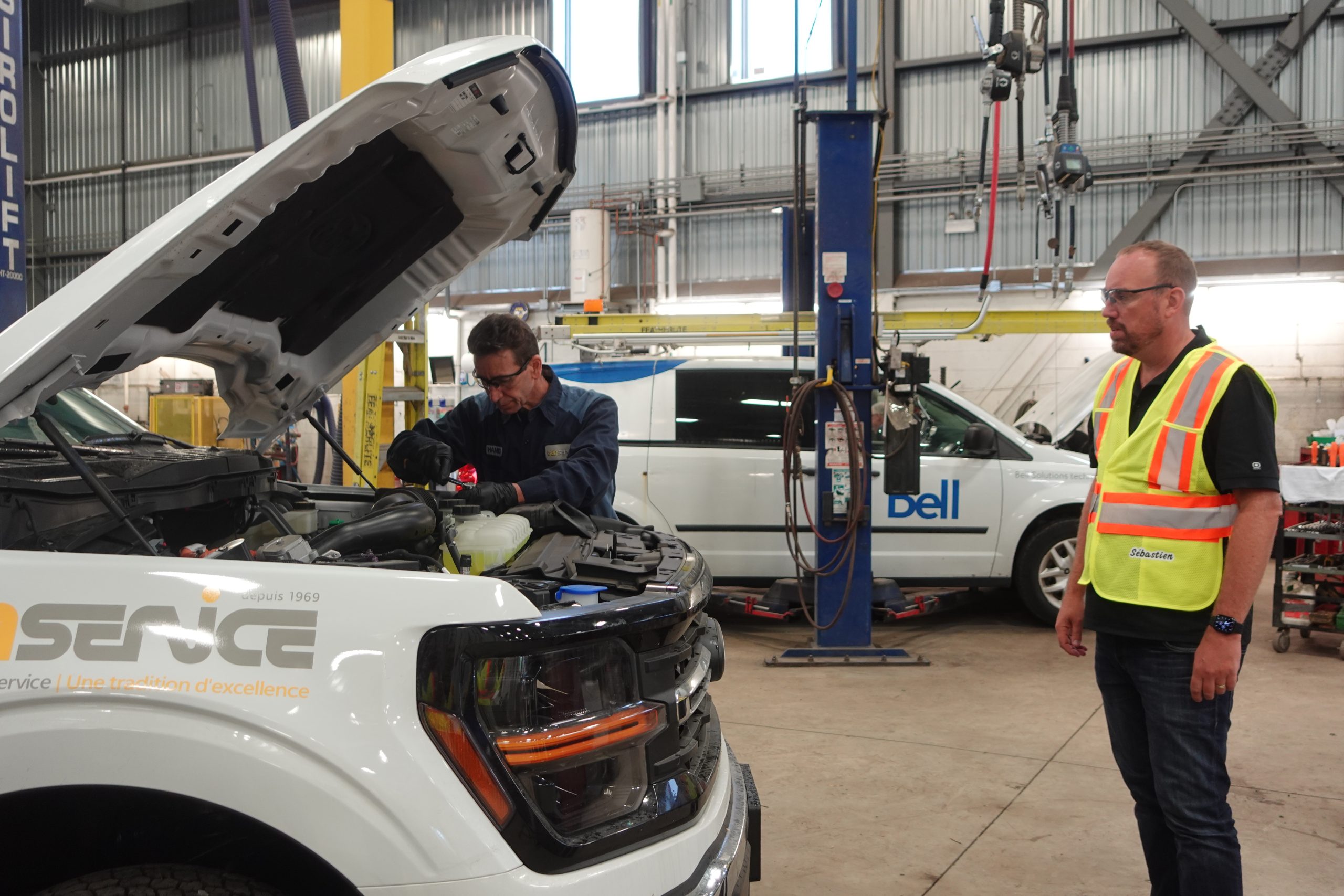
Full-service truck leasing in Canada: a CFO’s guide to predictable TCO and uptime
If your delivery promise depends on trucks showing up every day, you already know that “own vs. lease” is not just a financing question. It is a question about cost predictability, uptime, compliance, and the speed at which you can adapt your fleet to the business.
This guide explains full-service truck leasing in Canadian terms, how it differs from ownership and simple financing, and how to model total cost of ownership so that your board sees a clear path to predictable cost per kilometre and sustained uptime performance.
What full-service truck leasing includes
Full-service leasing bundles the vehicle, lifecycle planning, and maintenance into one accountable program with defined service levels. A mature program typically includes:
– Application-specific spec’ing and ordering, including duty cycle and climate considerations
– Integrated preventive and corrective maintenance, inspections, and parts
– 24/7 road service and substitute vehicle planning for continuity of service
– Compliance administration tied to federal and provincial requirements
– Analytics, KPI reporting, warranty recovery, and lifecycle advisory
Transervice structures full-service leasing with open-book pricing, guaranteed maximum annual rates, and optional profit sharing. Costs are transparent, maintenance is proactive, and uptime targets are managed through documented workflows and reporting.
Owning vs. full-service leasing in a Canadian context
Both models can work. The right answer depends on capital priorities, growth stage, compliance exposure, technician capacity, and your tolerance for maintenance variability.
Ownership can fit when:
– You have stable routes, in-house maintenance capability, and a clear replacement plan
– Capital is abundant and residual risk is acceptable within internal hurdle rates
– You prefer control of resale timing and are comfortable carrying parts and tooling
Full-service leasing often wins when:
– The business is growing quickly and capital preservation is a priority
– Uptime is a contractual requirement with penalties or high brand risk
– Technology refresh cycles are accelerating and emissions or refrigeration compliance is changing
– You want predictable monthly costs and a single point of accountability for maintenance and roadside events
For Canadian fleets, consider winter reliability, provincial inspection cycles, and cross-province operations. Integrated maintenance with telematics-informed diagnostics and a preventive maintenance calendar can materially reduce emergency repairs and road calls in peak winter months.
Key financial lenses for CFOs
Model total cost of ownership (TCO) using one consistent framework:
– Fixed costs: lease or depreciation expense, insurance, licensing, telematics subscriptions
– Variable costs: fuel, maintenance and repairs, tyres, road service, consumables
– Risk and opportunity costs: downtime impact, emergency premiums, compliance incidents, driver lost time
– Residual risk: resale price volatility, technology obsolescence, carbon or refrigerant transition risk
Full-service leasing converts much of the maintenance volatility into a predictable operating cost under guaranteed maximum annual rates. Ownership retains upside if you outperform maintenance assumptions and capture strong resale, but you also carry downside from unplanned failures or soft used-equipment markets.
Evaluating residuals, maintenance variability, and driver support
Residuals: Request transparent assumptions and market benchmarks. Align lease term to expected duty cycle and OEM warranty windows. Verify who owns and manages resale risk.
Maintenance variability: Ask for planned vs. unplanned ratios, mean time to repair, and road calls per million kilometres. Confirm winterization standards, warranty recovery processes, and parts sourcing rules.
Driver support: Review roadside response times, substitute equipment provisions, and safety coaching. Effective driver programs reduce abuse-related failures and improve fuel economy and uptime.
Example specs by industry
Grocery and food distribution:
– Multi-temp reefers with remote temperature monitoring, insulated trailers, liftgates
– Idle-reduction strategies and fuel heater kits for winter
– Tight PM intervals to protect cold chain reliability
Utilities:
– Class 6-8 chassis with PTO or auxiliary power, dielectric buckets or service bodies
– 4×4 options, winter tire plans, and enhanced electrical system checks
– Onsite maintenance windows to align with outage and storm response
Retail and parcel:
– High-cube vans or 5-ton straight trucks with tailgates, door sensors, and LED cargo lighting
– Urban brake and suspension specs, telematics for stop density and idle control
– Rapid-turn PM scheduling to match extended seasonal hours
How Transervice aligns lease structure and maintenance
Transervice designs the lease and maintenance program as one operating system. Equipment is spec’d for duty cycle, maintenance is integrated with telematics and digital inspections, and pricing follows open-book rules with guaranteed maximum annual rates. KPI dashboards track uptime, cost per kilometre, planned vs. unplanned work, and road service performance. Efficiency gains can be shared under profit sharing. For fleets that prefer to retain ownership on certain assets, Transervice offers dedicated contract maintenance with the same discipline and reporting.
If you need a primer on structured maintenance programs, see our overview of fleet maintenance to understand preventive maintenance program design and compliance alignment. For companies seeking a lease-led model, explore our approach to full-service leasing to see how commercial truck leasing can stabilize budgets while improving availability.
A step-by-step acquisition workflow
1) Business case and TCO model Define routes, duty cycles, seasonality, uptime targets, and five-year cost assumptions.
2) Spec development and validation Translate duty cycles into OEM and component specs. Validate with winter test cases and fuel consumption modelling.
3) Pricing and contract alignment Finalize open-book pricing, guaranteed maximum annual rates, and SLA targets. Clarify residual handling and substitute equipment rules.
4) Implementation planning Set onboarding timeline, PM calendar, compliance checklists, driver briefings, and telematics integrations.
5) Pilot and ramp Deploy initial units, confirm KPI baselines, and tune PM intervals. Lock in reporting cadence and variance thresholds.
6) Full rollout and continuous improvement Expand deployment, monitor planned vs. unplanned work, and adjust specs based on data. Review annually against TCO and uptime targets.
Board approval checklist
– Clear TCO model with sensitivity analysis for fuel, maintenance, and residuals
– Defined uptime SLA and substitute equipment provisions
– Open-book pricing terms and guaranteed maximum annual rates
– Residual risk ownership and end-of-term options
– Compliance workflows aligned to federal and provincial rules
– Cyber and data access provisions for telematics and maintenance records
– Transition plan, pilot milestones, and KPI dashboard
– Exit and scale clauses to support growth or contraction
Simple TCO framework you can reuse
– Inputs: kilometres per year, asset life or lease term, fuel price assumptions, PM interval, failure rate assumptions
– Outputs: cost per kilometre by cost class, uptime percentage, and downside scenario with emergency repair frequency
– Decision gates: if cost per kilometre spread between ownership and full-service leasing narrows below your risk premium, prefer the model that de-risks uptime and compliance
FAQs
What is full-service truck leasing? A long-term program that provides the vehicle plus integrated maintenance, roadside support, compliance administration, and reporting for a predictable monthly cost, with defined service levels.
Is it better to own a fleet or lease? It depends on capital priorities, maintenance capability, residual risk appetite, and uptime requirements. Leasing often wins when growth is rapid, uptime is contractual, or maintenance variability is hurting predictability.
What does fleet lease mean? A fleet lease is an agreement to use vehicles for a defined term and usage, typically with services attached. In a full-service model, maintenance and support are included.
What are typical terms for equipment financing? Terms vary by asset class and use case, but 36 to 84 months is common in Canada. Structures can include operating leases, finance leases, or loans. Pricing and residual treatment depend on duty cycle, credit, and market conditions.
Next step
If your mandate is to de-risk uptime and stabilize cost per kilometre, align your lease, maintenance program, and SLA under one accountable structure. Transervice can help you model scenarios with open-book pricing and guaranteed maximum annual rates so you can present a clear, data-backed plan to your board.
Explore how our full-service leasing program supports predictable TCO and uptime. If you operate a mixed model, see our dedicated fleet maintenance programs for preventive maintenance and compliance integration.